The Instituto de Investigaciones Biomédicas Sols-Morreale (IIBM), CSIC-UAM, took part last Friday, September 25, in the European Researchers’ Night, together with 10 other CSIC centres from the Cantoblanco Campus (UAM). Once again, the event was held at the Espacio Fundación Telefónica, where throughout the day science left the laboratories to meet the public directly.
A day to discover science up close
The programme began in the morning with a science fair aimed at students from Primary School, Secondary School, Upper Secondary School and Vocational Training, who had the opportunity to discover different scientific disciplines first-hand and talk to researchers from the participating centres.
In the afternoon, the Espacio Fundación Telefónica opened its doors to the general public, especially families, with a programme combining a science fair, hands-on workshops, activities in closed rooms and live performances.
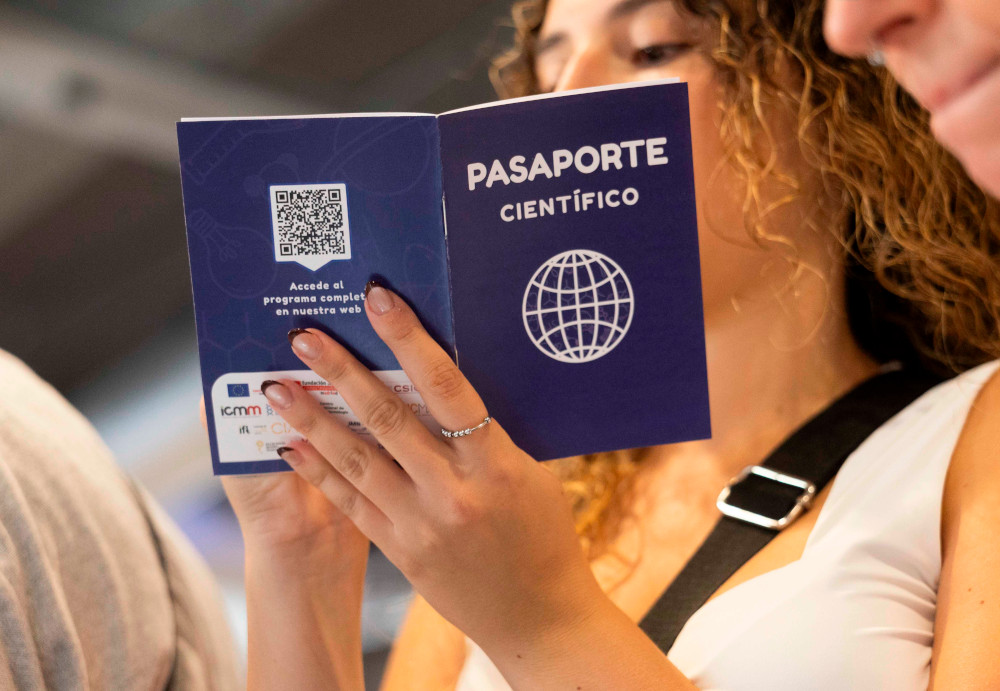
Visitors could explore the different spaces and complete the Science Passport, collecting a sticker from each participating CSIC centre after taking part in its activities. Those who completed the passport received a gift at the end of their scientific journey.
Science shared the spotlight with performing arts and music. The audience enjoyed two theatre performances, Eclipsadas and Doro, as well as a live concert by Biolocas.
Four IIBM workshops and an enthusiastic public response
During the afternoon, the IIBM presented four science outreach activities, which attracted a large and diverse audience.
Three of the workshops were set up on the ground floor, in a highly visible location that ensured a steady flow of visitors throughout the four hours of activity. Children and adults came along to experiment, ask questions and discover some of the phenomena and processes related to science.
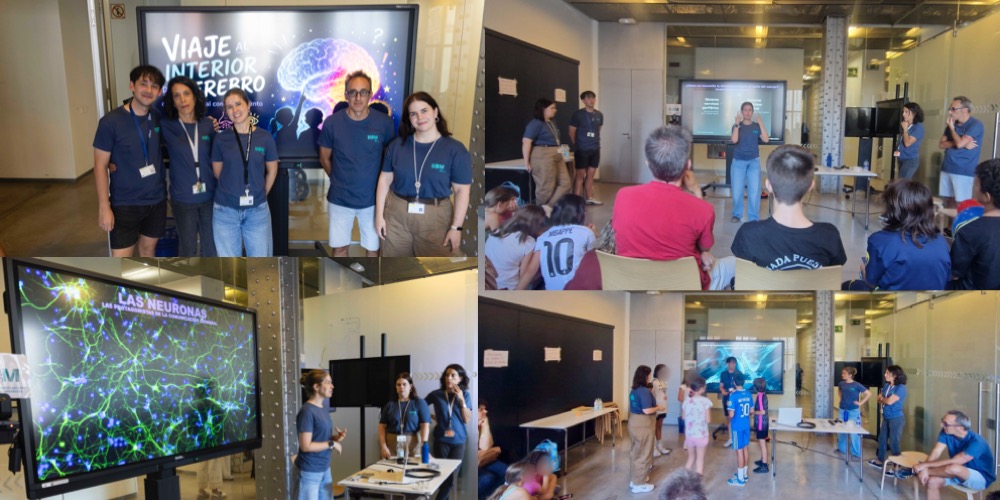
The fourth workshop, devoted to the brain and behaviour, took place in a room on the third floor, as it required specific equipment and materials, including a microscope and real histological preparations. Four 45-minute sessions were held, allowing participants to enjoy a journey into the world of neuroscience. The response was so enthusiastic that demand exceeded the room’s initially planned capacity.
The magic of dry ice
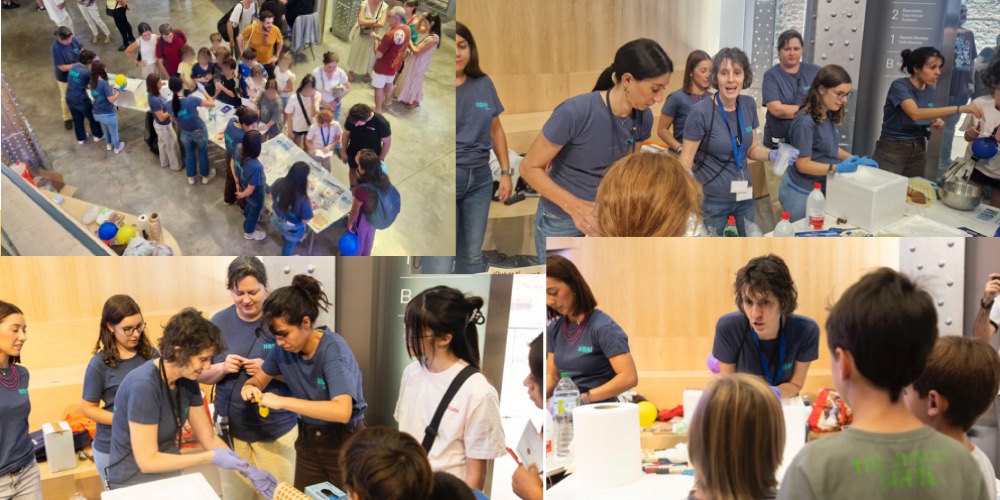
Cristina Peña Maroto, together with Vanessa Ramiro Ponce, Cristina González Galán and Raisa Fedichkina, once again turned science into a spectacle with “The Magic of Dry Ice.”
Balloons, water and dry ice were used to demonstrate the properties of sublimation in a highly visual way: the process by which a substance passes directly from a solid to a gaseous state. Participants were able to see how balloons could be inflated using dry ice. There were also bubbling containers and authentic “witches’ cauldrons.” The activity was particularly captivating for younger visitors, while also sparking the curiosity of adults.
Take Your DNA Home
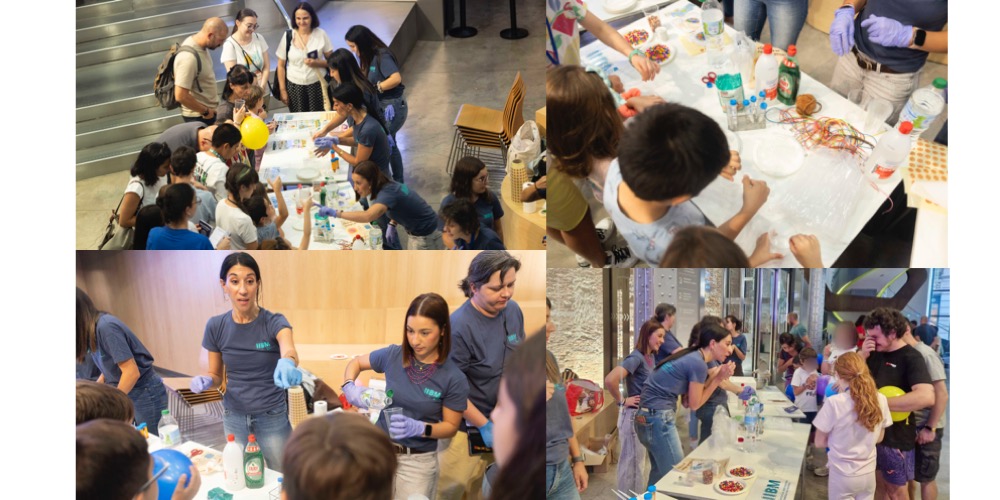
The second workshop, “Take Your DNA Home,” was coordinated by Soledad Báez López, with the help of Ana Candel Marín.
The activity enabled participants to extract their own DNA from cells collected from the oral cavity. A simple water rinse was used to collect the cells, followed by the addition of salt, detergent and alcohol to break them down and cause the DNA to precipitate. The most eagerly awaited moment came when the characteristic white strands of DNA appeared. These could be collected with a pipette and preserved in an Eppendorf tube to take home.
Discover What You Eat! A Journey Through Nutrients
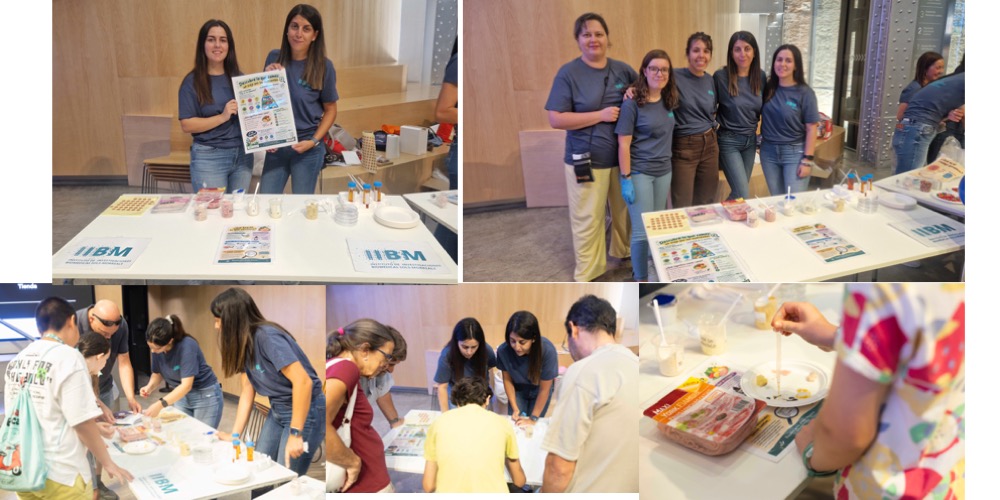
Silvia Calero Pérez and Ángela Montes San Lorenzo led “Discover What You Eat! A Journey Through Nutrients,”
Through simple experiments with everyday foods, participants explored what some of the products that form part of our regular diet actually contain. Using Lugol’s reagent, they analysed samples of bread, cheese, yoghurt and different types of cooked ham to identify the presence of starch and proteins and observe the colour changes produced during the experiments. The activity introduced key concepts related to nutrients while encouraging participants to pay closer attention to food labels and reflect on what they eat.
Journey Inside the Brain: From Neuron to Behaviour
The workshop “Journey Inside the Brain: From Neuron to Behaviour,” designed by the IIBM’s NeuroActivas team, offered a different experience, based on a journey through several stations exploring how the nervous system works. Beatriz Muñoz Falder, Celia López Menéndez, Alain de Solis, Ana Simón García and Álvaro Moreno Rupérez guided participants on a journey through neuroscience, where they could build a neuron, identify its main parts, observe histological brain preparations under a microscope and examine mouse brains preserved in jars, as well as learn about some of the tools researchers use to study the nervous system. The activity also included a collaborative game to understand how neurons communicate through neurotransmitters. The workshop’s strong reception highlighted the public’s interest in discovering how the nervous system is studied.
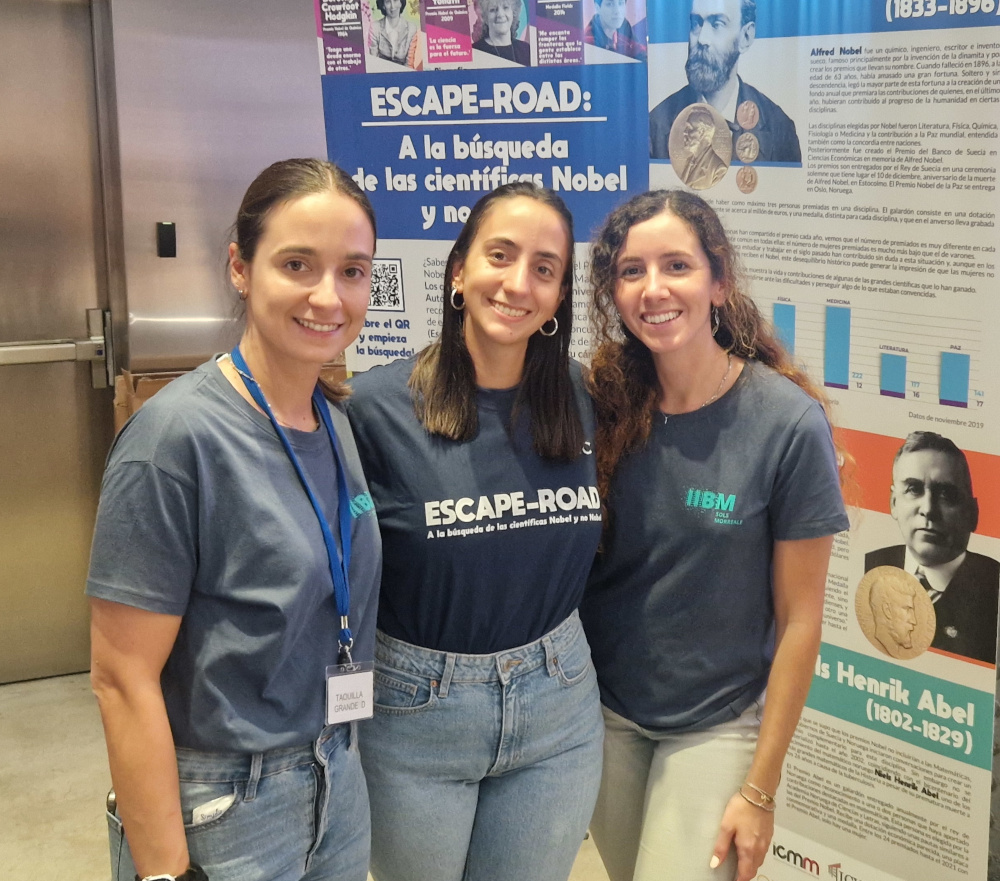
A key role was also played by the three volunteers: Lucía Jiménez Gómez, Manuela Hidalgo López and Paula Hernández Ruiz de Azcárate, who carried out essential tasks such as managing capacity, helping with the Escape Road, distributing passports and guiding visitors throughout the event.
The IIBM would like to thank the entire team for their dedication, enthusiasm and commitment to science outreach. Preparing this type of activity requires time, work and coordination, and the European Researchers’ Night once again demonstrated the value of researchers’ participation in initiatives that bring biomedical science closer to society.
Eleven CSIC centres united to bring science closer to society
Participation in the European Researchers’ Night was jointly organised by the CSIC centres on the Cantoblanco Campus: Instituto de Ciencia de Materiales de Madrid (ICMM, coordinator), Instituto de Catálisis y Petroleoquímica (ICP), Centro Nacional de Biotecnología (CNB), Instituto de Investigación en Ciencias de la Alimentación (CIAL), Instituto de Cerámica y Vidrio (ICV), Instituto de Ciencias Matemáticas (ICMAT), Instituto de Física Teórica (IFT), Instituto de Micro y Nanotecnología (IMN), Centro de Biología Molecular (CBM), the Instituto de Investigaciones Biomédicas Sols-Morreale (IIBM) and the Instituto Geológico y Minero de España (IGME), which joined the initiative for the first time this year.
Once again, the European Researchers’ Night turned the centre of Madrid into a major meeting point between science and society, demonstrating that research can be shared with people of all ages in an engaging, accessible and participatory way.