The Instituto de Investigaciones Biomédicas Sols-Morreale (IIBM), CSIC-UAM, actively took part in the Semana de la Ciencia y la Tecnología 2025 (SCT2025) with a full program that allowed students to experience the daily life of biomedical research, reinforcing the Institute’s strong commitment to scientific outreach.
All initiatives led by CSIC centers and delegations can be found on the CSIC website (www.semanadelaciencia.csic.es), which each year compiles the titles, descriptions, and participation formats of every activity offered. This relevant national event continues to bring science closer to society through activities designed both for the general public and for students across different educational levels.
At the IIBM, five activities were held—three science tours and two workshops—with the involvement of numerous IIBM members (both junior and senior) belonging to different research groups and scientific-technical services. Throughout the month of November, the Institute welcomed 130 students and their teachers from various educational centers across the Comunidad Autónoma de Madrid.
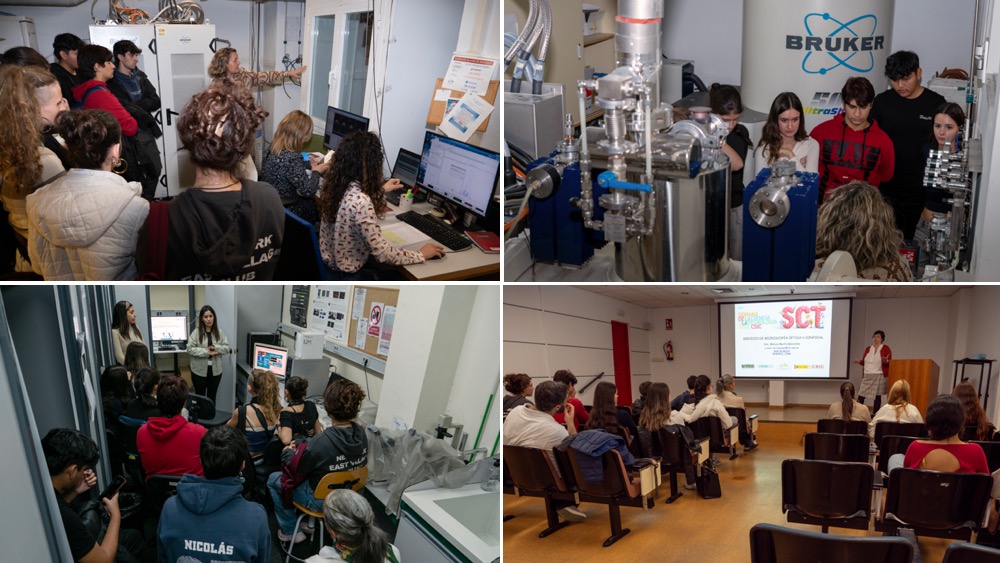
The science tours once again proved to be among the most popular formats. The activity “Bioimagen aplicada en biomedicina”, organized by the Biomedical NMR Sebastián Cerdán service and the Optical & Confocal Microscopy service, was coordinated by Teresa Navarro, Mónica Martín, Patricia Sánchez, and Bárbara Acosta. Thirty Bachillerato students from IES Lope de Vega learned about different technological approaches in magnetic resonance and microscopy used in biomedical research. The activity also included contributions from Silvia Calero and Ángela Montes, members of the research group led by Ángela Martínez-Valverde.
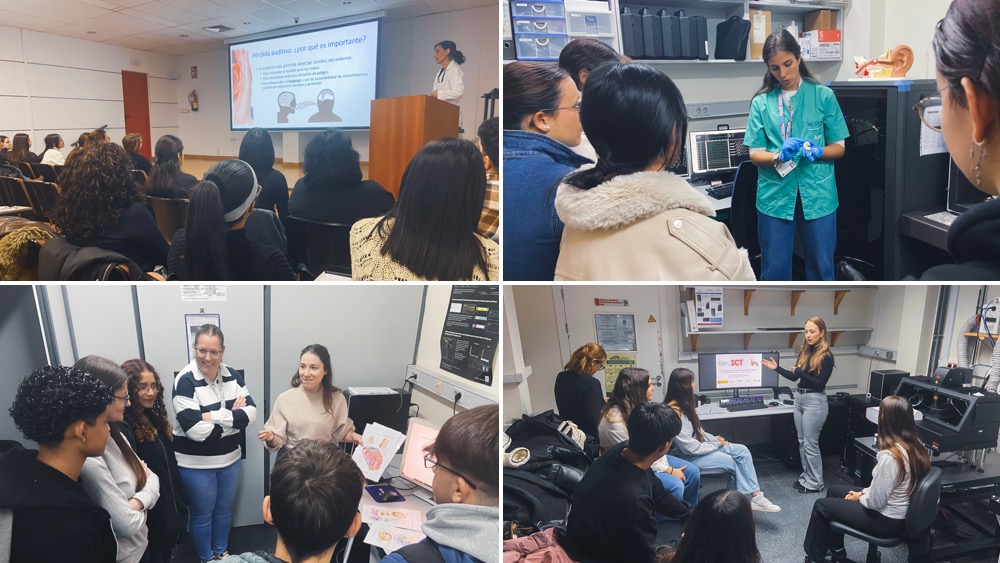
The activity “Investigando la audición y la pérdida auditiva”, coordinated by Silvia Murillo-Cuesta from the Non-invasive Neurofunctional Evaluation Service (ENNI) and with the participation of Mónica Martín and Bárbara Acosta (Optical & Confocal Microscopy), Inés Méndez, Carmen García, and Marina Tapias (Neuropathology of Hearing and Myelinopathies group), brought together students from the Audiología Protésica program at Centro EPSUM and from IES Gonzalo Torrente Ballester. In total, 28 students explored the biological and experimental bases of auditory function and its alterations. During this science tour, students visited the laboratory where pre- and post-doctoral researchers work and the ENNI Service, where auditory function and inner-ear morphology are evaluated in animals, in addition to observing the inner ear through confocal microscopy. Sonia Gómez from the Histology Facility also collaborated in the activity.
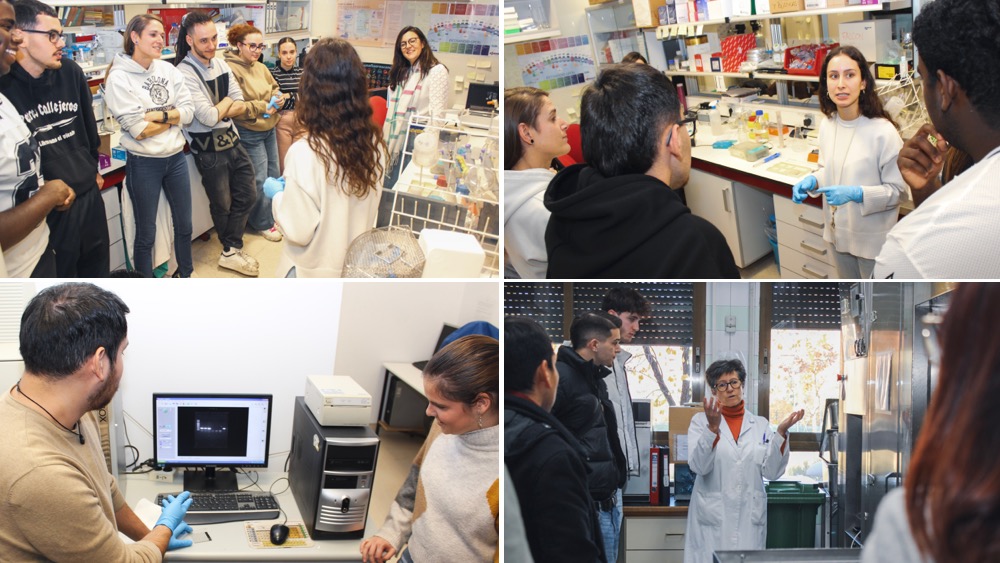
The third science tour, “Trabajando en el Instituto de Investigaciones Biomédicas Sols-Morreale”, was led by Laura Doblado, Leticia Selinger, Clara Bernet, and María Monsalve. Twenty-five Formación Profesional students from the Laboratorio Clínico y Biomédico program at Universidad Europea de Madrid had the opportunity to visit the laboratory, learn about commonly used techniques—such as cell culture, genetic analysis of different types of samples, and PCR—and discover the research lines currently being pursued by the team.
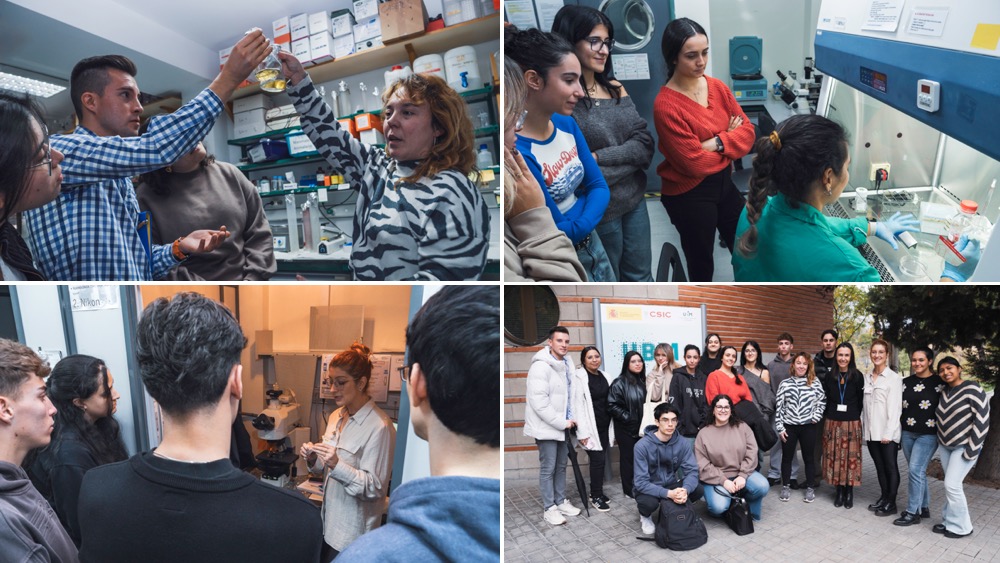
In the Scientific workshops section, the activity “La ameba Dicty nos ayuda a estudiar las enfermedades raras” was held once again, coordinated by Ricardo Escalante together with Laura Antón, Beatriz Monforte, and Mónica Valiente. Fifteen second-year Bachillerato students from Colegio Enriqueta Aymer observed plates containing the model organism Dictyostelium discoideum (Dicty) under the microscope, identifying both wild-type and mutant amoebae. They also received an introduction to autophagy and the model organisms commonly used in biomedicine, helping them understand the relevance of Dicty in the study of rare diseases.

A completely new activity was introduced this year: the workshop “Explorando la Biología Celular: Detección de Mutaciones y Marcaje Celular”, delivered by Rodrigo Landauro from the Cardiovascular Pathophysiology group led by Lisardo Boscá; Javier Ruiz Navarro from the Nanoinmunology and T Lynphocytes group led by Manuel Izquierdo; and Celia González Muñoz from the Inmunity, Immunopathology and Emergent Therapies group led by Juan Manuel Zapata. Two consecutive sessions were held for a total of 28 FP students from Centro EPSUM and their enthusiastic teacher. Participants experimented with basic cellular and molecular biology techniques. After an introduction to fundamental concepts, they stained their own buccal mucosa cells and examined different structures under a fluorescence microscope. They also performed gel electrophoresis using samples from leukemia patients to identify the presence or absence of a specific mutation previously amplified by PCR.
A shared commitment to scientific outreach
The IIBM extends its gratitude to everyone who participated in the Semana de la Ciencia y la Tecnología 2025 of the CSIC for their enthusiasm, commitment to outreach, and the extra effort involved in opening services and laboratories to students. Once again, these activities reaffirm the Institute’s mission to bring science closer to young people and to help ensure that, in the future, they grow into informed, critical adults ready to face the challenges ahead.
