On February 26, the III Conference on “Rare Diseases, Therapeutic Approaches” was held at the Instituto de Investigaciones Biomédicas Sols-Morreale (IIBM) CSIC-UAM, on the occasion of Rare Disease Day, which is commemorated every year on February 28. During this conference, it once again became clear the commitment of the Institute’s scientists to research on rare diseases, as well as the role of patient associations in the pursuit of the common goal of finding new therapeutic approaches.
A disease is considered rare when it affects fewer than 5 in every 10,000 people. Although at first glance they may appear to be a minority problem, they have a major impact on health and on healthcare systems, as it is estimated that around 6% of the population suffers from one of the more than 7,000 rare diseases described to date. The main challenge in finding therapeutic approaches for these diseases lies in their enormous diversity. Each rare disease has different causes, symptoms and progression, which, together with the small number of patients, makes both basic and clinical research difficult, as well as the accumulation of medical experience. As a result, today only between 5% and 10% of rare diseases have any specific treatment. The vast majority still lack targeted therapeutic options, which highlights the need to invest in basic and clinical research to investigate their causes and open the door to new treatment strategies.
The IIBM, through its Departamento de Enfermedades Raras, organised the III Conference on Rare Diseases in order to present therapeutic approaches that are currently in an advanced stage of research, in clinical trials, or that have already achieved approval for the treatment of patients.
The conference was opened by Pilar López Larrubia, director of the IIBM and coordinator of the Red de Enfermedades Raras del CSIC, and Inmaculada Ibáñez de Cáceres, Director General de Investigación y Docencia de la Comunidad de Madrid, who reminded us of the commitment of the centre, the CSIC and the Comunidad de Madrid to research on these diseases.
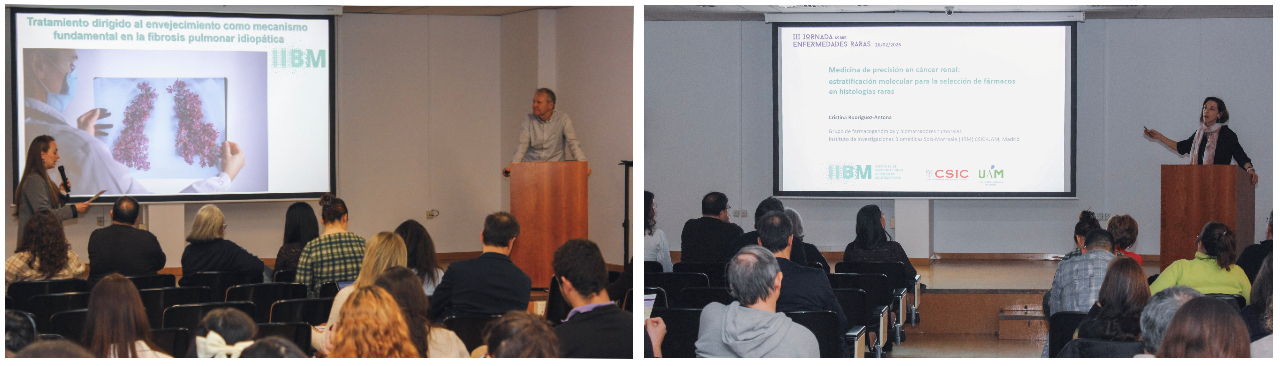
In the scientific sessions we had the participation of IIBM researchers Wolfgang Link, from the research group Mecanismos Moleculares de Envejecimiento y Cáncer, who spoke about the treatments they are developing for idiopathic pulmonary fibrosis, and Cristina Rodríguez-Antona, from the research group Farmacogenómica y Biomarcadores Tumorales, who explained the importance of precision medicine for the stratification of patients with renal cancer, including several rare types, and for drug selection.
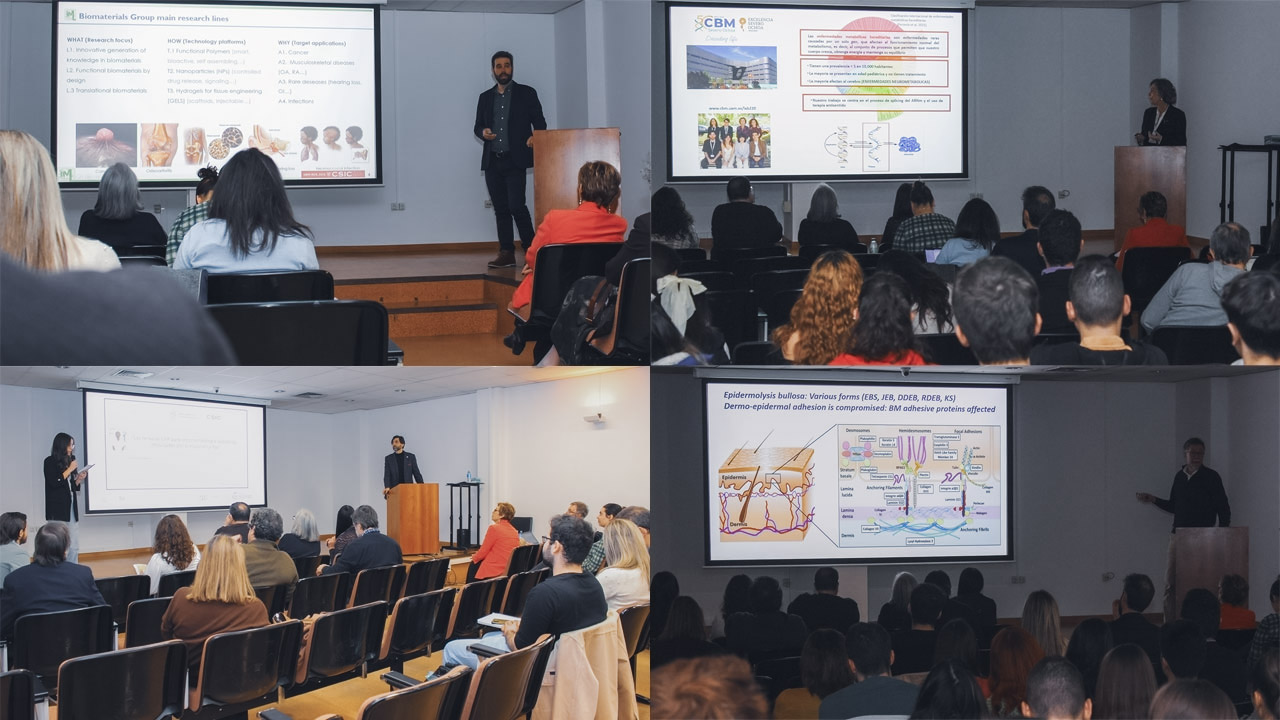
 In addition, we had the opportunity to listen to presentations by researchers external to the IIBM: Luis Rojo del Olmo, from the Instituto de Ciencia y Tecnología de Polímeros del CSIC; Lourdes Ruiz Desviat, from the Centro de Biología Molecular Severo Ochoa (UAM-CSIC); Antonio Pérez Martínez, Head of the Paediatric Haemato-Oncology Service at Hospital Universitario La Paz and principal investigator at the CNIO; and Fernando Larcher Laguzzi, researcher at the Centro de Investigaciones Energéticas Medioambientales y Tecnológicas (CIEMAT).
Luis Rojo del Olmo explained the advances made by his group in the development of biomaterials that will enable the treatment of osteopenic diseases. Antonio Pérez Martínez spoke about the CAR therapies that his group is developing at Hospital La Paz for the treatment of paediatric tumours, with the aim of curing more patients and doing so more effectively than with conventional treatments. Fernando Larcher Laguzzi explained how CRISPR therapies are being applied for the treatment of epidermolysis bullosa, better known as butterfly skin disease. Lourdes Ruiz Desviat introduced the therapies they are developing using antisense oligonucleotides to treat neurometabolic diseases caused by defects in splicing, which are already being applied in other diseases such as spinal muscular atrophy.
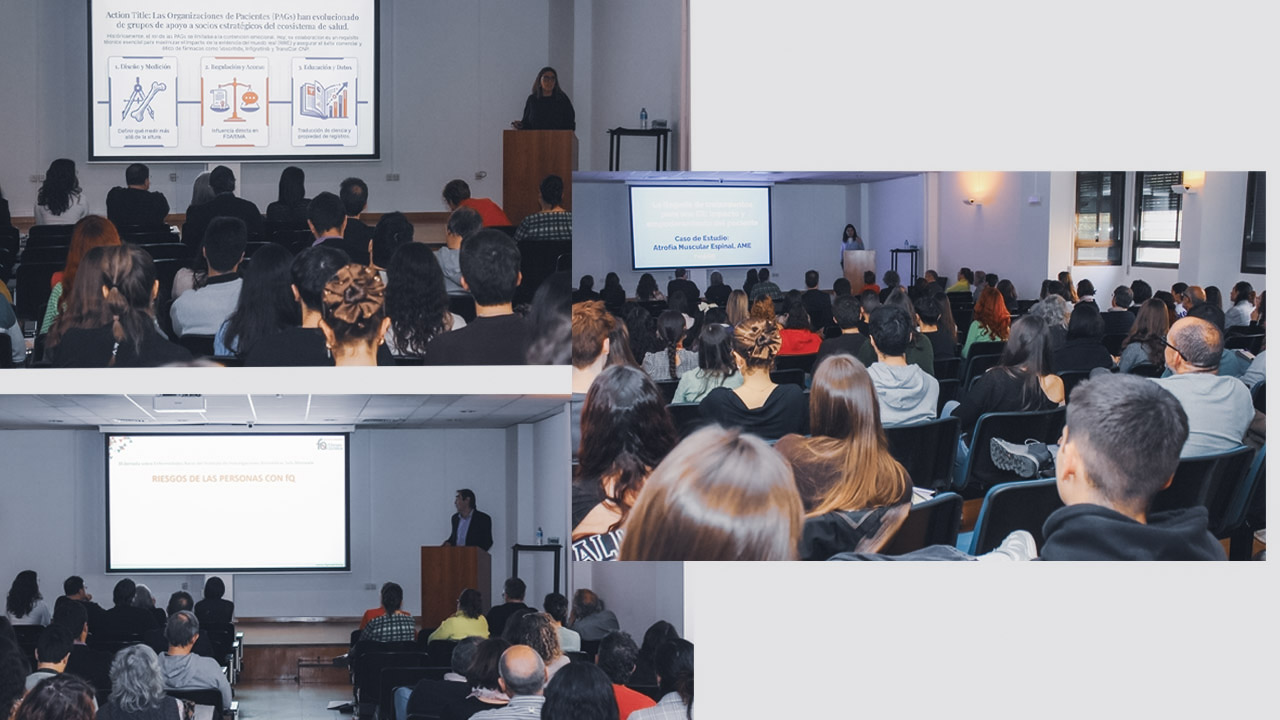
Mencía de Lemus, from FundAME, Fundación Atrofia Muscular Espinal, spoke about spinal muscular atrophy and the role that patient associations have played in promoting basic research and in bringing therapies to patients. Susana Noval Iruretagoyena, from Fundación ALPE Acondroplasia, explained the vital role of patient associations in the development of new therapies and in communication with researchers and regulatory agencies.
The conference concluded with Fernando Moreno Pizarro, president of the Asociación Madrileña de Fibrosis Quística, who spoke about the change that the arrival of new therapies has meant for patients with cystic fibrosis, which have prolonged and improved their quality of life. The participation of these representatives of patient associations served as a reminder of the true meaning of biomedical research and highlighted the importance of collaboration between patients, associations, researchers, clinicians and regulatory agencies in order to promote research and accelerate the arrival of new therapies.
The conference was closed by Francesc García Gonzalo, director of the Departamento de Enfermedades Raras del IIBM, who thanked the speakers and all the attendees for their participation.