- The pRCC-TREAT project, coordinated by the IIBM, has been selected by the European platform EP PerMed with a total endowment of more than 1,6 million euros.
The researcher Cristina Rodríguez-Antona, head of the Pharmacogenomics and Tumor Biomarkers group at the Instituto de Investigaciones Bioméicas Sols-Morreale (IIBM) CSIC-UAM, leads an international consortium that has obtained funding in the JTC 2025 call of the European Partnership for Personalised Medicine (EP PerMed). The project, titled "Molecular-based stratification of metastatic papillary renal cell carcinoma to personalize treatment strategies – pRCC-TREAT", has a global budget of €1,613,200, of which €250,000 will be directly allocated to the IIBM research group.
A therapeutic challenge in kidney cancer
Papillary renal cell carcinoma (pRCC) is a very heterogeneous type of kidney tumor and, although surgery is effective in early stages, the prognosis for patients with metastasis is poor. "Currently, metastatic pRCC is treated unspecifically based on clinical trials including mainly another type of kidney cancer, clear cell RCC, despite having very different molecular and clinical characteristics," explains Rodríguez-Antona. This lack of a solid biological rationale for the therapy leads to variable and often insufficient results for patients.
Towards precision medicine
The main objective of pRCC-TREAT is to break away from the "one-size-fits-all" approach and move towards a truly personalized therapy. Preliminary results from the team show that one-third of these patients have a specific metabolic defect that activates the HIF pathway, favoring metastasis but also suggesting a greater sensitivity to antiangiogenic drugs and immunotherapy.
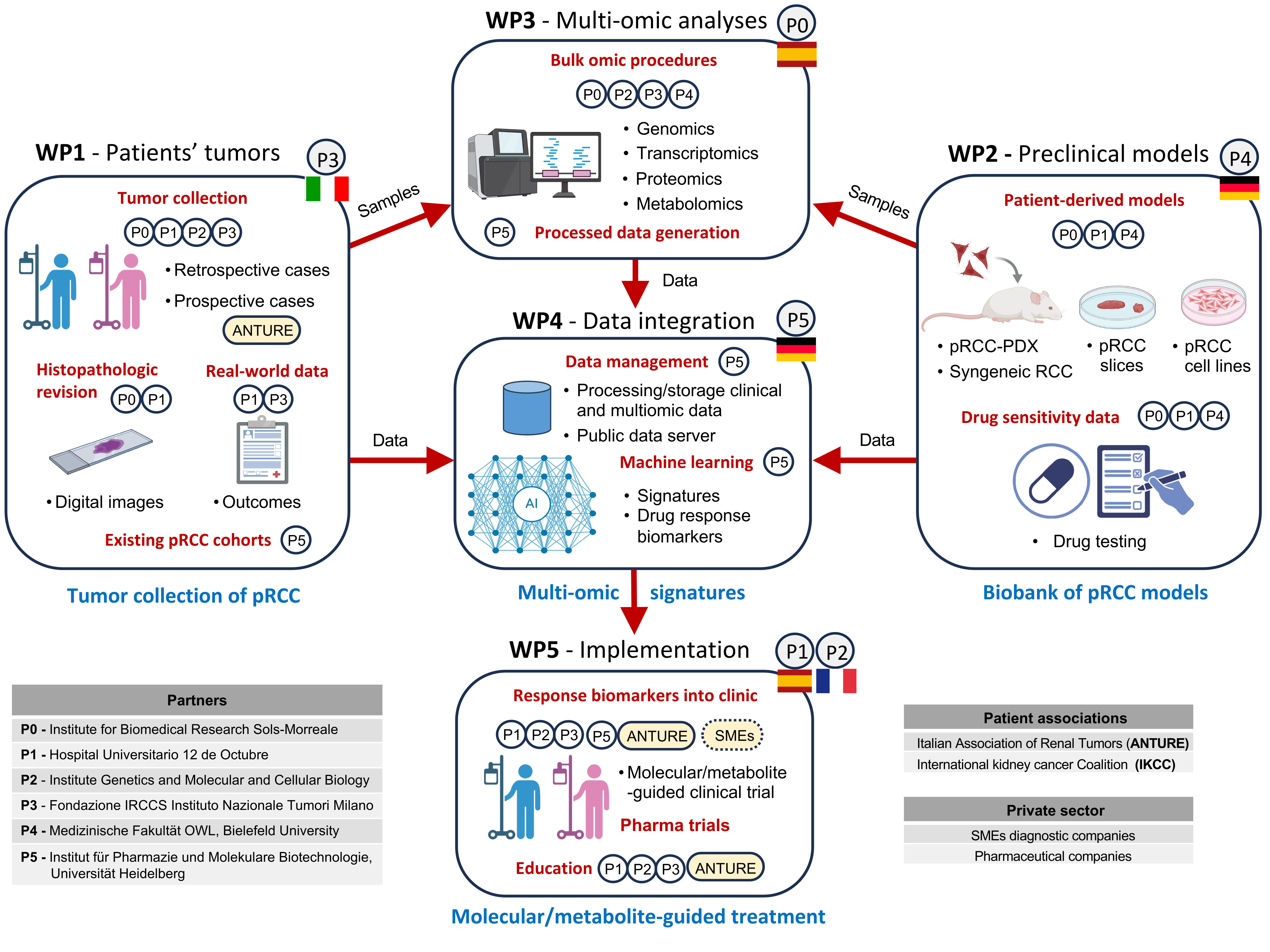
To delve into this finding, the project will use a comprehensive strategy including:
- Multi-omic analysis: Integration of genomic, transcriptomic, proteomic, and metabolomic data from patients.
- Experimental models: Use of patient-derived xenografts and murine models to test drug sensitivity.
- Artificial Intelligence: Application of machine learning to identify molecular signatures that function as predictive biomarkers of treatment response.
A shared global resource
In addition to therapeutic advances, the consortium will generate the world's largest research resource for metastatic pRCC, which will include collections of tumor samples, preclinical models, and an integrated clinical-omic database to accelerate future innovations.
The project unites six leading institutions from four countries (Spain, Germany, Italy, and France), working closely with industry and patient organizations. "The project aims to transform care for metastatic papillary kidney cancer by identifying the biological drivers of treatment response and delivering personalized therapies that improve outcomes for patients," concludes the researcher.
Details of the project can be found HERE
This project received funding from Instituto de Salud Carlos III under the frame of the European Partnership for Personalised Medicine, EP PerMed (GA N° 101137129 of the EU Horizon Europe Research and Innovation Programme).
The views and opinions expressed are those of the author(s) only and do not necessarily reflect those of the European Partnership for Personalised Medicine (EP PerMed), national/regional funding organisations, the European Union or the European Commission. Neither of these parties can be held responsible for them.