- A study led by IIBM, together with Universidade do Algarve, shows that a mouse species with high regenerative capacity is also resistant to cancer
- The findings, published in the journal Scientific Reports, open new avenues for cancer research and regenerative medicine
A research team from the “Molecular Mechanisms of Aging and Cancer” group, led by Wolfgang Link at the Instituto de Investigaciones Biomédicas Sols-Morreale (IIBM) CSIC-UAM, together with the team of Gustavo Tiscornia at the Universidade do Algarve, has demonstrated that the African spiny mouse (Acomys), known for its ability to regenerate complex tissues, also shows a remarkable resistance to tumor development.
Unlike most mammals, which respond to injury by forming scar tissue, this rodent can regenerate skin, muscle, and even restore functional connections in the spinal cord. This feature makes it a highly valuable model for studying the biological mechanisms underlying tissue regeneration.
The “wound that never heals” paradox
For decades, cancer has been described as “a wound that never heals,” since both processes—tissue repair and tumor development—involve intense cell proliferation. This similarity has led to a long-standing hypothesis in biomedicine: whether organisms with high regenerative capacity might be more prone to developing cancer.
However, the results of this study challenge this idea and point in the opposite direction. The researchers compared the response of the spiny mouse with that of standard laboratory mice (Mus musculus) after exposing them to a chemical protocol designed to induce skin tumors. While conventional mice developed multiple papillomas, the spiny mice did not develop any tumors.
A defense system against cellular damage
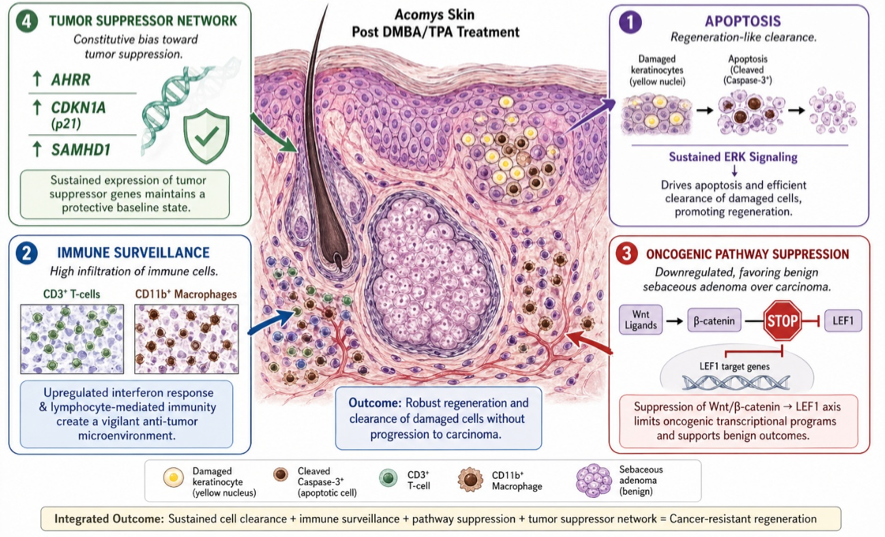
To understand this behavior, the researchers analyzed the molecular response of both species using RNA sequencing over a 28-day period. The results show that the spiny mouse activates a distinct biological response to carcinogenic stress.
Specifically, this animal showed increased activation of tumor suppressor genes in the early stages of exposure, as well as a broader immune response, including the activation of cells capable of eliminating potentially cancerous cells. In addition, once the damage was controlled, gene activity rapidly returned to baseline levels.
Another key finding was the increased level of programmed cell death in damaged areas, which allowed the elimination of genetically altered cells before they could become tumorigenic.
Implications for cancer research
“These results indicate that regenerative capacity and cancer resistance are not incompatible, but may actually be linked,” explains Wolfgang Link. “The spiny mouse has developed highly efficient mechanisms to control cell proliferation, activating both the immune system and tumor suppressor pathways.”
This work positions tissue regeneration mechanisms as a potential key factor in cancer prevention. Understanding how the spiny mouse controls cell proliferation may help identify new therapeutic targets and advance the development of innovative strategies for cancer prevention and treatment, as well as for regenerative medicine.
The article can be accessed HERE